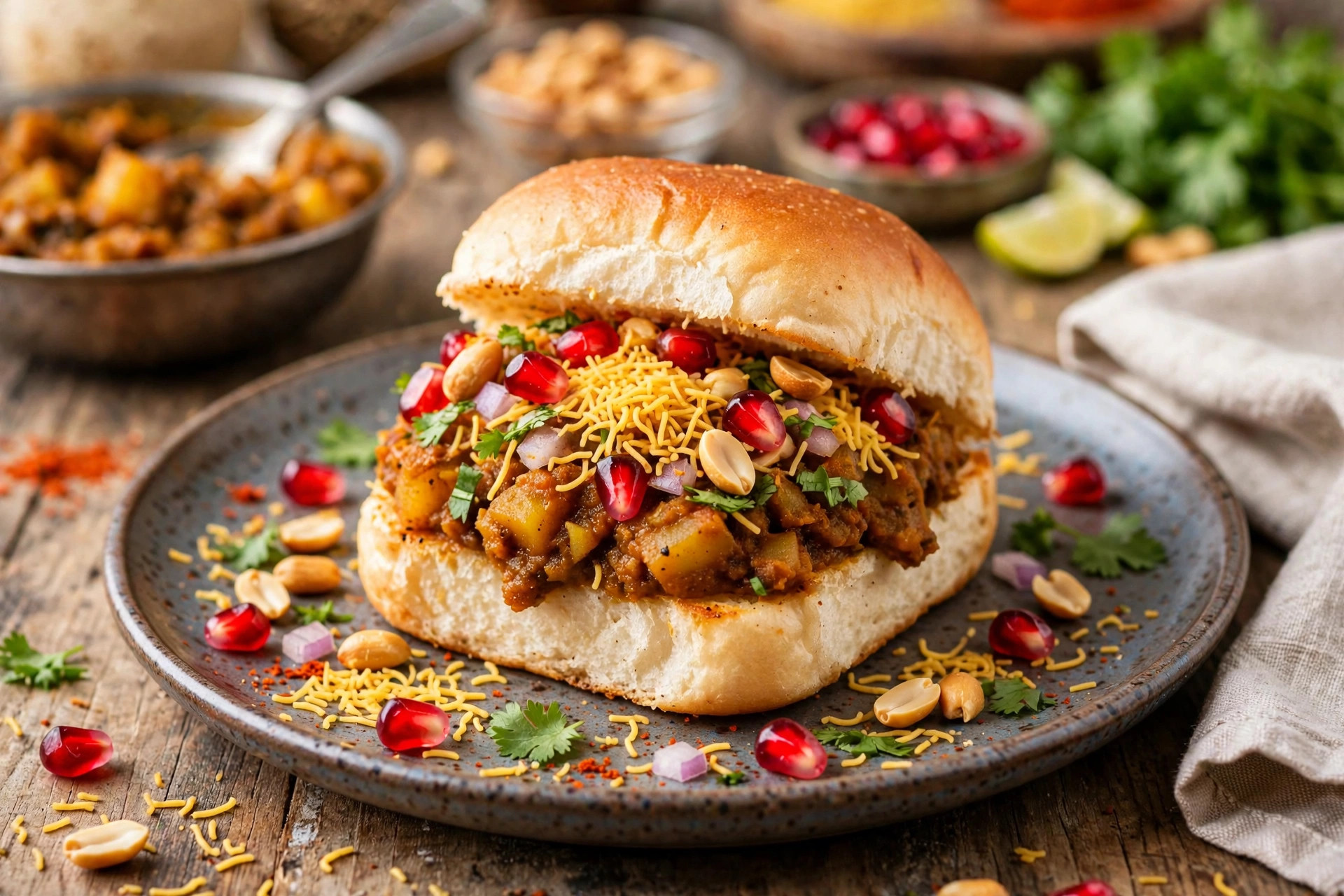
At a busy street cart, the routine is quick and practised: a soft bun is sliced open, smeared with chutneys, packed with glossy spiced potatoes, showered with pomegranate seeds, peanuts and sev, then pressed briefly on a hot tawa with butter. That is dabeli — a snack that manages to be sweet, spicy, tangy, soft and crunchy in a single bite, and one of Gujarat's most distinctive contributions to Indian street food.
Where dabeli comes from
Dabeli is widely credited to Kutch, in Gujarat, and is strongly associated with the town of Mandvi in particular. Street-food histories commonly attribute its creation to a Mandvi vendor in the latter part of the twentieth century, though, as with many popular street foods, the exact details of who first made it and when are retold in slightly different versions and are hard to pin down with certainty. What is not in dispute is the geography: dabeli began as a Kutchi snack, spread across Gujarat, and from there travelled to Mumbai, Pune and other cities, where it is now a fixture at chaat stalls and Gujarati snack shops.
The name itself is often explained through the Gujarati word for pressed — dabavvu — a reference to how the filled bun is pressed together, and pressed again on the tawa before serving. Whether or not that is the complete story of the name, it describes the snack perfectly: everything about dabeli is pressed into that bun.
The heart of it: dabeli masala and potatoes
The filling is boiled, mashed potato mixed with dabeli masala, the spice blend that defines the dish. Recipes for the masala vary by shop and family — many vendors guard their proportions — but it is characteristically a warm, reddish blend built on dried red chillies and coriander, with spices such as cinnamon, cloves, cumin and black cardamom among those commonly used, plus a touch of sugar in many versions. That built-in sweetness is essential: dabeli is not simply a spicy potato bun, and its masala is noticeably different from pav bhaji masala or a generic chaat masala.
The masala is usually bloomed in oil, sometimes with tamarind chutney stirred through the potatoes as well, giving the filling its glossy look and its layered sweet-sour-spicy flavour. The mixture is spread in a wide plate or thali at the stall, ready to be portioned into buns to order, and it is traditionally decorated right there in the tray with pomegranate seeds, chopped onion and coriander — so the garnish is part of the display, not an afterthought.
What goes into the bun
The bun itself is a soft, round, pav-like roll, sometimes called ladi pav in style. A finished dabeli is assembled in layers:
- Garlic chutney: a fiery red chutney, usually spread on one side of the bun, which provides most of the heat.
- Tamarind chutney: sweet and tangy, spread on the other side, balancing the garlic chutney.
- Spiced potato filling: a generous portion of the dabeli masala potatoes.
- Crunch and freshness: chopped raw onion, roasted or masala peanuts, and fresh pomegranate seeds.
- Sev: fine crunchy chickpea noodles, sprinkled over the filling, often so generously that they spill out of the sides.
Once filled, the bun is pressed and toasted on a hot tawa with butter until the outside is lightly crisp and golden, then served immediately, usually with an extra scattering of sev and pomegranate on top.
What dabeli tastes like
The first impression is contrast. The bun is soft with a buttery, toasted surface. The potato is soft, warm and sweet-spiced, the garlic chutney lands with real heat, and the tamarind brings a sour-sweet brightness. Then the textures arrive: the pop of pomegranate, the crunch of peanuts and sev, the sharp bite of raw onion. No single flavour dominates for long, which is exactly why people finish one and consider a second. Compared with a vada pav — the other famous bun-based snack of the region — dabeli is sweeter, more layered and more heavily garnished, while vada pav is simpler and more directly spicy.
How it is served on the street
Dabeli is made to order and eaten at once; it does not travel or sit well, because the sev softens and the bun loses its toast. Vendors work from a prepared tray of potato filling and assemble each bun in well under a minute, adjusting heat on request — less garlic chutney for a milder version, extra for regulars who like it fiery. It is typically served on a small paper plate or sheet, eaten standing at the cart, often as an evening snack rather than a full meal.
Variations you may come across
- Cheese dabeli: a modern stall variation with grated cheese added to the filling or melted over the toasted bun.
- Butter and jam-style twists: some vendors offer sweeter versions with extra chutney or a jam-like spread; these are playful departures from the classic balance.
- Dabeli masala as a standalone product: packaged dabeli masala is widely sold, which has made home versions far easier; the same masala is occasionally used to flavour other potato dishes.
- Home-style dabeli: made with shop-bought pav and masala, usually toasted in a pan at home. The method is the same, with the garnishes — pomegranate, peanuts and sev — kept just as generous.
Regional loyalty also plays a part: Kutchi and Gujarati vendors often emphasise the sweet-spicy balance, while versions sold further from Gujarat sometimes lean spicier or simpler. Tasting one near its home region, where the masala is made with confidence, remains the benchmark.
Making sense of dabeli at home
A home cook does not need specialist equipment, only the right components: good soft buns, a dabeli masala you trust (bought or homemade), both chutneys, and fresh garnishes prepared before the potatoes are cooked. Assemble just before serving, toast in butter, and do not hold back on the sev. The snack's charm is its abundance — a neat, restrained dabeli is somehow not quite a dabeli.
Frequently Asked Questions
Where does dabeli originate?
Dabeli is widely credited to Kutch in Gujarat and is strongly associated with the town of Mandvi. Exact details of its creation are retold in different versions, as is common with street foods.
What is dabeli masala?
It is the defining spice blend for the dish, characteristically built on dried red chillies and coriander with warm spices and, in many versions, a touch of sugar, giving the potato filling its sweet-spicy flavour.
How is dabeli different from vada pav?
Dabeli uses spiced mashed potato in a bun with two chutneys and generous garnishes of pomegranate, peanuts and sev, and tastes sweet, tangy and spicy. Vada pav is a batter-fried potato dumpling in a bun and is simpler and more directly spicy.
What does the name dabeli mean?
It is commonly linked to the Gujarati idea of pressing, which fits the way the filled bun is pressed together and pressed on the tawa before serving.
Can dabeli be made in advance?
The potato filling and chutneys can be prepared ahead, but the bun should be filled, toasted and served immediately, otherwise the sev softens and the bun loses its crisp, buttery surface.