South Indian

Dosas, idlis, sambar and coconut-based dishes from southern India.

South Indian

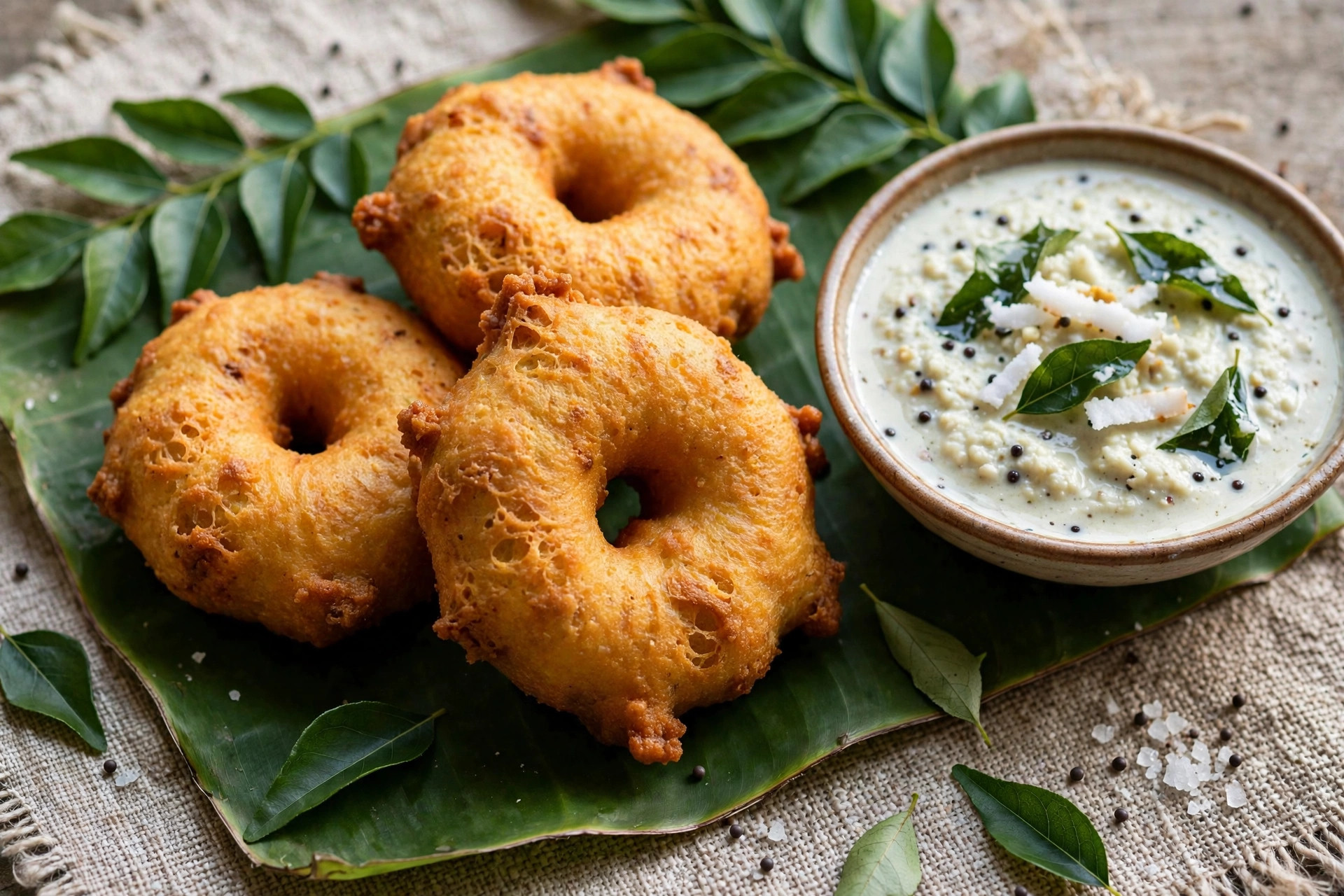
Medu Vada

Medu Vada is a crisp, golden South Indian fritter of ground urad dal, shaped like a small doughnut, with a fluffy, soft centre and a crunchy crust. The dal is soaked, ground to a thick, airy batter, and given a short rest — most of that preparation time is inactive soaking and resting, not hands-on work, and it is counted in the prep time below so the total stays honest. The active work is the grinding, shaping, and frying, which together take under an hour. Medu vada is a classic tiffin and breakfast item, usually served with sambar and coconut chutney, and it is also festive enough for a weekend spread. One practical tip: grind with as little water as possible, adding it a spoon at a time — a loose batter will not hold its shape and will drink up oil while frying.
4 hours 55 minutes

South Indian

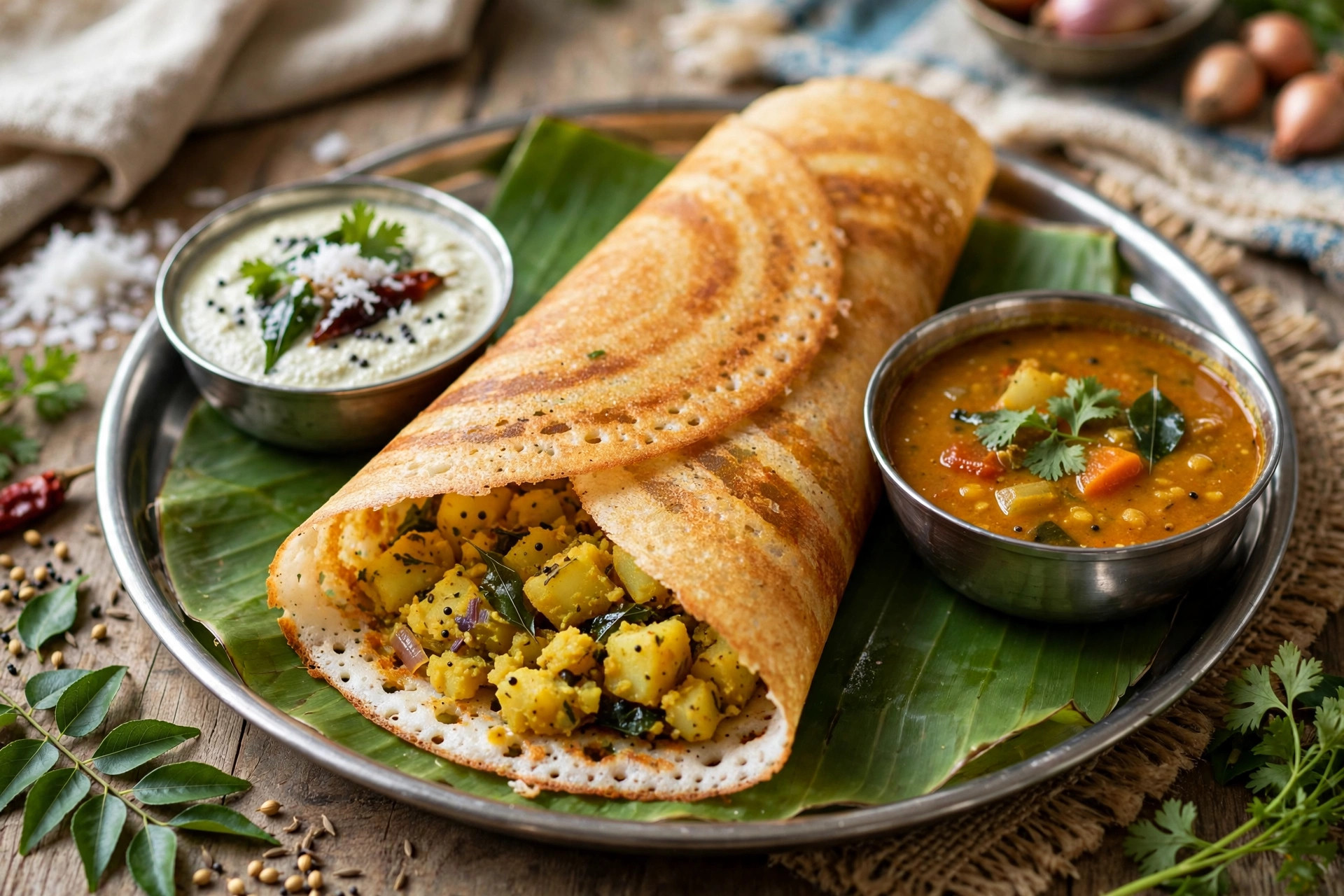
Masala Dosa

Masala Dosa is a crisp, golden crepe made from fermented rice and urad dal batter, folded around a spiced potato filling. The dosa is thin and lacy at the edges, the filling is soft and yellow with turmeric, mustard seeds and curry leaves, and together they make a filling breakfast or a light dinner. Please plan ahead: the rice and dal need about 6 hours of soaking and the batter then needs 8–12 hours to ferment in a warm place — that soaking and fermentation time is inactive time and is not included in the prep and cook times below. A practical tip: spread the batter on a hot but not smoking tawa, and sprinkle a few drops of water to cool the pan slightly between dosas.

60 minutes

South Indian

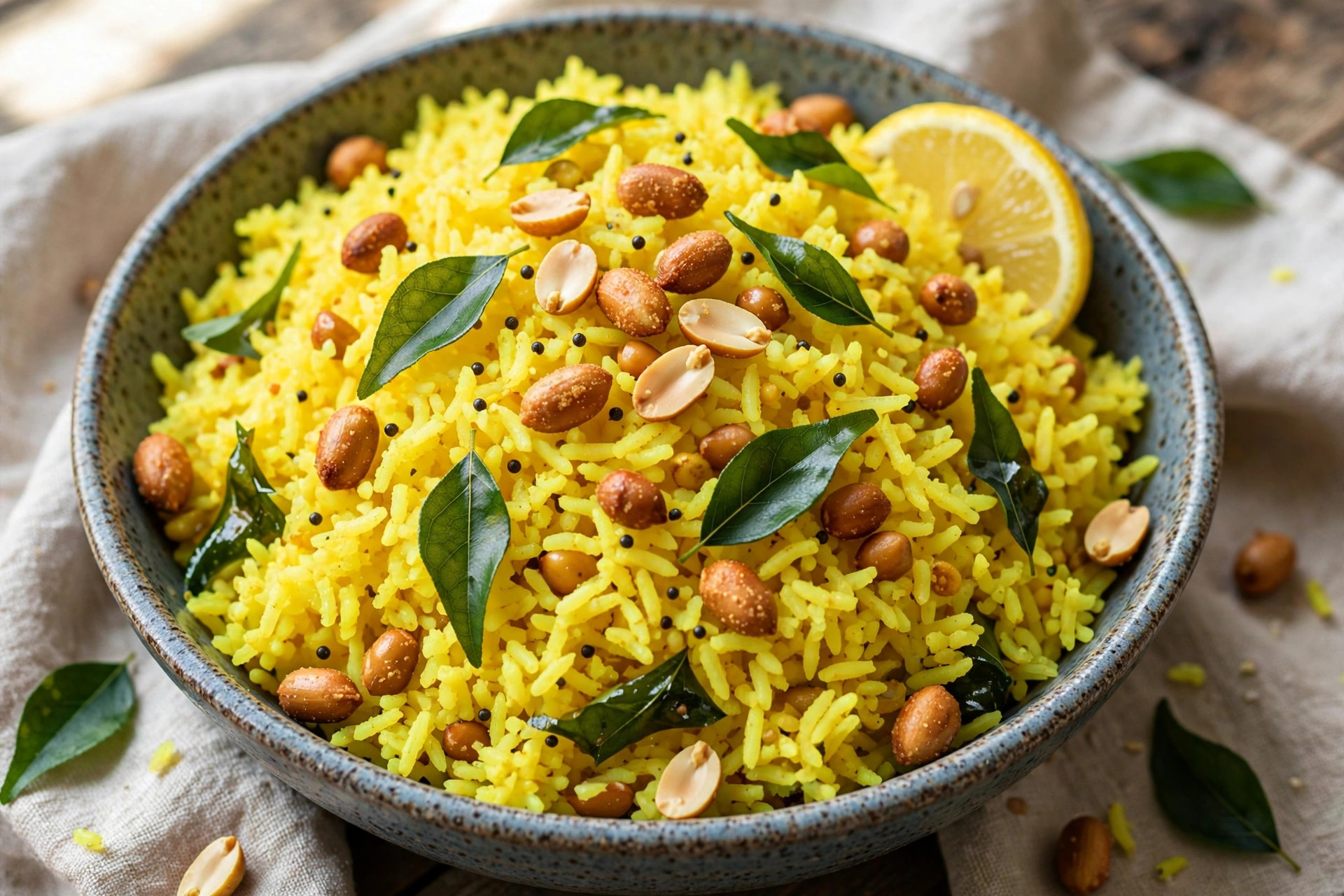
Lemon Rice with Roasted Peanuts

Lemon rice is a practical way to turn plain cooked rice into a complete lunch. Turmeric gives it colour, mustard seeds, curry leaves, ginger and chillies give it warmth, and roasted peanuts add the crunch that keeps each bite interesting. Lemon juice goes in at the end, off the heat, so the flavour stays bright rather than bitter. This version works well with rice cooked earlier in the day or the previous evening, packs neatly into a lunch box, and sits happily alongside curd, papad, pickle or a simple vegetable side. It is also forgiving: the tempering takes minutes, the mixing is gentle, and the seasoning can be adjusted at the table with a little extra lemon or salt.

25 minutes

South Indian

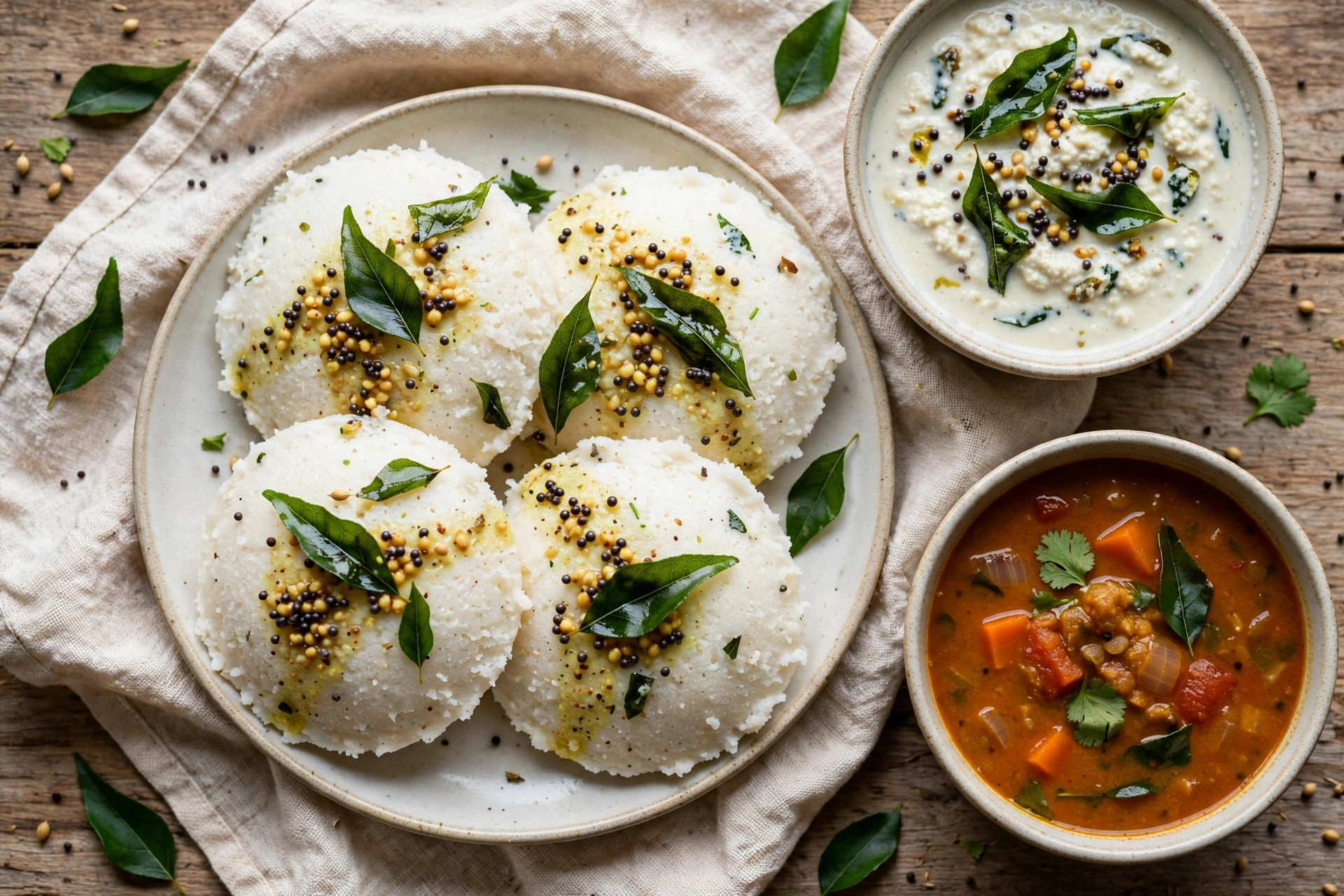
Instant Rava Idli

Instant rava idli solves the most common idli problem: there was no batter fermented the night before. Rava, or sooji, mixed with curd rests for just 15 minutes, a tempering of mustard seeds, dals, curry leaves and cashew goes in for flavour and crunch, and a little fruit salt added at the very end lifts the batter in the steamer. Timing is the whole recipe. Once the fruit salt is mixed in, the batter should go into greased moulds and into the steamer without delay, and it should be mixed gently, not beaten, so the bubbles stay in. The result is soft, white idlis that work with chutney, sambar, or simply a podi and oil if that is what is at hand. Make only as much batter with fruit salt as fits in one steaming batch; if you are steaming in two batches, split the rested batter and add half the fruit salt to each half just before that batch goes into the steamer.

32 minutes

South Indian

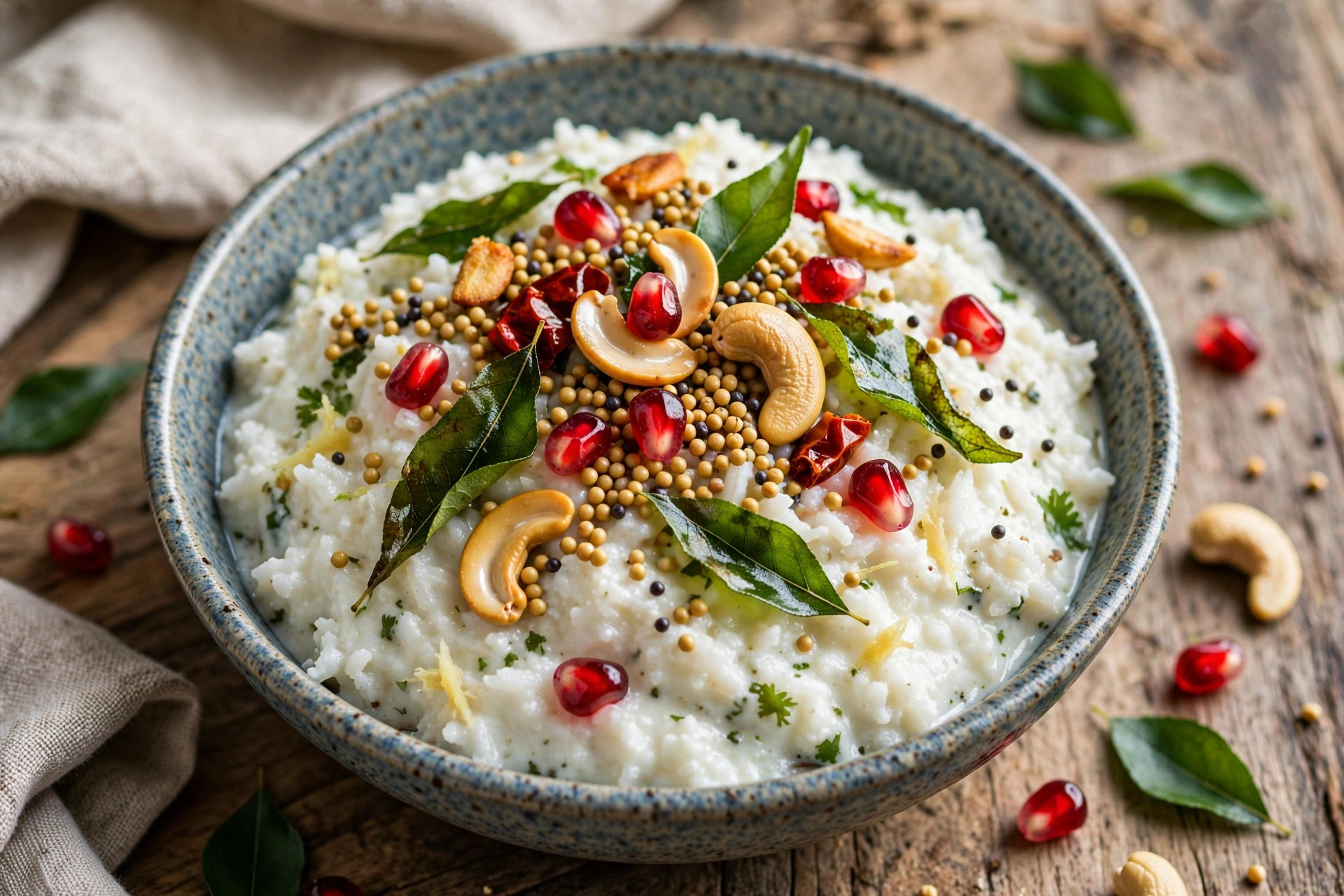
Curd Rice with South Indian Tempering

Curd rice, or thayir sadam, is soft-cooked rice mixed with curd and finished with a South Indian tempering of mustard seeds, urad dal, chana dal, curry leaves and chillies. The details that matter are simple: the rice should be softer than plain steamed rice, it should cool a little before the curd goes in so the curd does not split or turn too sour, and a small amount of milk keeps the texture creamy if the dish will sit for a while before eating. The garnish is kept simple — just the tempering and fresh coriander — so the rice stays plain and cooling. Curd rice works as the last course of a meal, as a lunch-box dish, or as a light meal on its own with pickle. Serve at room temperature or slightly chilled, and stir before serving because it firms up as it stands.

30 minutes