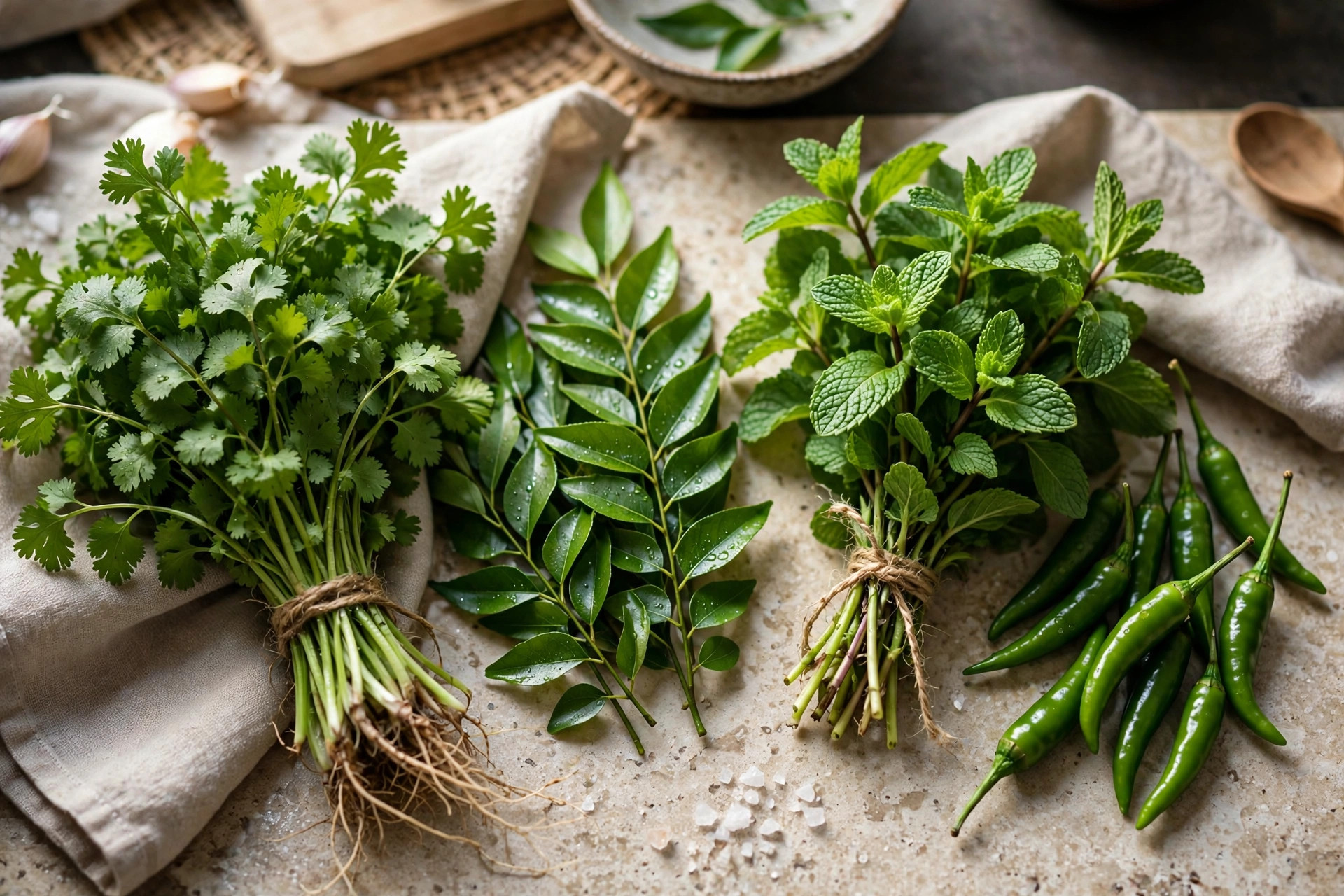
A bunch of coriander bought on Monday can look tired by Wednesday, mint blackens in its plastic bag, and curry leaves dry out before the week is over. Herbs and chillies are delicate: they lose moisture quickly, bruise easily and spoil faster when stored wet. A few consistent habits — sorting, drying, wrapping and using the right container — can add days of useful life without any special equipment.
The rules that apply to almost everything green
Sort first
As soon as you bring herbs home, spread them out and remove any yellowed, slimy or blackened leaves and stems. One rotting leaf speeds up spoilage in the rest of the bunch. Trimming damaged parts at the start is the single easiest step people skip.
Wash, then dry properly
Wash herbs in a bowl of water to loosen grit, lift them out and repeat if needed. The important part is what comes next: dry them thoroughly. Shake off water, spread the herbs on a clean kitchen towel or paper towels, and pat them dry, or use a salad spinner if you have one. Storing herbs wet is the fastest route to slime and mould. If you prefer, you can also store them unwashed and wash just before use — either approach works, as long as what goes into the fridge is not dripping wet.
Control moisture, do not eliminate air completely
Herbs need a slightly humid environment so they do not wilt, but sealed plastic with trapped water droplets causes rot. The reliable middle ground is a container or bag lined with a dry paper towel or clean cloth, which absorbs excess moisture. Change the towel if it becomes damp.
Keep them cold, but not crushed
Store herbs in the fridge, ideally in the crisper drawer or a less intensely cold shelf, and do not bury them under heavy vegetables. Crushed leaves bruise, turn dark and spoil sooner.
Coriander (dhania)
Coriander has tender stems and roots that hold grit, so wash it well. Two storage methods work reliably:
- Paper towel method: Dry the coriander, wrap it loosely in a dry paper towel or cloth, and place it in an airtight container or zip bag in the fridge. This suits chopped or root-trimmed coriander and keeps leaves usable for several days.
- Jar of water method: Trim the stem ends, stand the bunch upright in a jar with a little water, like flowers, and cover the leaves loosely with a bag. Change the water every couple of days. This keeps whole bunches perky, provided the leaves themselves stay dry.
If coriander is still plentiful as it starts to fade, chop it finely and freeze it in a small container or ice-cube tray. Frozen coriander loses its fresh texture, so use it in cooked dishes, chutneys and garnishes added at the end of cooking rather than in salads.
Curry leaves
Curry leaves are sturdier than coriander but dry out and lose aroma if left loose. Remove the leaves from thick stems only if you wish — they also store well on the stem. Make sure they are completely dry, then wrap them in a paper towel and keep them in an airtight container in the fridge.
For longer storage, curry leaves freeze well. Pack dry leaves in a freezer bag or container; they can go straight into hot oil for a tempering without thawing, and they keep their flavour far better frozen than dried at home in most cases. Avoid washing them again right before freezing, as surface water forms ice and damages the leaves.
Mint (pudina)
Mint blackens easily, especially when wet or bruised, so handle it gently. Pick the leaves, discard any that are already dark, dry them well and store them wrapped in a paper towel inside a container in the fridge, as with coriander. The jar-of-water method also works for mint sprigs with stems.
Use stored mint sooner rather than later for drinks and raitas, where its fresh look matters. Mint that is slightly past its best is still fine blended into chutney. For freezing, chop mint and freeze it in ice-cube trays with a little water; add the cubes directly to drinks or cooked dishes.
Green chillies
Green chillies last longer than leafy herbs, but they wrinkle, redden or grow mould at the stem when stored carelessly. A well-known and effective habit is to remove the stems before storing: the stem end is where moisture collects and spoilage often starts. Wash the chillies, dry them completely, remove the stems, then line a container with a paper towel, add the chillies and refrigerate.
Check the container every few days and remove any chilli that has softened or spotted, so it does not affect the rest. For long storage, green chillies can be frozen whole in a freezer bag. Frozen chillies are easy to chop or grate while still firm and work well in cooked food, though they will be softer once thawed.
Common mistakes that shorten shelf life
- Storing herbs in the shop's thin plastic bag: It traps moisture unevenly and offers no protection from crushing.
- Putting wet herbs straight into a sealed box: Trapped water causes slime within a day or two.
- Washing everything again and again: Repeated wetting and handling bruises leaves; dry storage with one proper wash is enough.
- Leaving herbs on the counter: Leafy herbs wilt within hours at room temperature in warm weather.
- Ignoring one bad leaf or chilli: Spoilage spreads; a quick check every couple of days protects the whole batch.
A simple routine on shopping day
- Unpack herbs and chillies as soon as you get home.
- Sort out damaged leaves; remove chilli stems.
- Wash, then dry everything thoroughly on a towel.
- Wrap each herb separately in a dry paper towel and box it.
- Label nothing, complicate nothing — just use the oldest batch first and freeze anything you clearly will not finish.
None of this needs special containers or gadgets. Dry leaves, a clean towel, a lidded box and five minutes of sorting do most of the work, and they save both money and a mid-week trip to the market.
Frequently Asked Questions
Should I wash herbs before storing them or before using them?
Either works. If you wash before storing, dry the herbs completely first, because wet storage causes slime. If you store them unwashed, keep them dry and wash just before use.
Why do my herbs turn slimy in the fridge?
Almost always because they were stored wet or with a rotting leaf in the bunch. Dry herbs thoroughly, remove damaged leaves and line the container with a paper towel to absorb excess moisture.
Does removing green chilli stems really help?
Yes. The stem end collects moisture and is where mould often starts. Removing stems, then storing dry chillies in a towel-lined container, noticeably extends their life.
Can I freeze fresh herbs?
Yes. Curry leaves freeze well whole, and coriander and mint freeze best chopped, in containers or ice-cube trays. Frozen herbs suit cooked dishes and chutneys, not salads, because they soften on thawing.
How long will stored herbs stay fresh?
It varies with how fresh they were at purchase. With sorting, drying and towel-lined refrigeration, coriander and mint typically stay usable for several days, curry leaves longer, and green chillies the longest of the four.