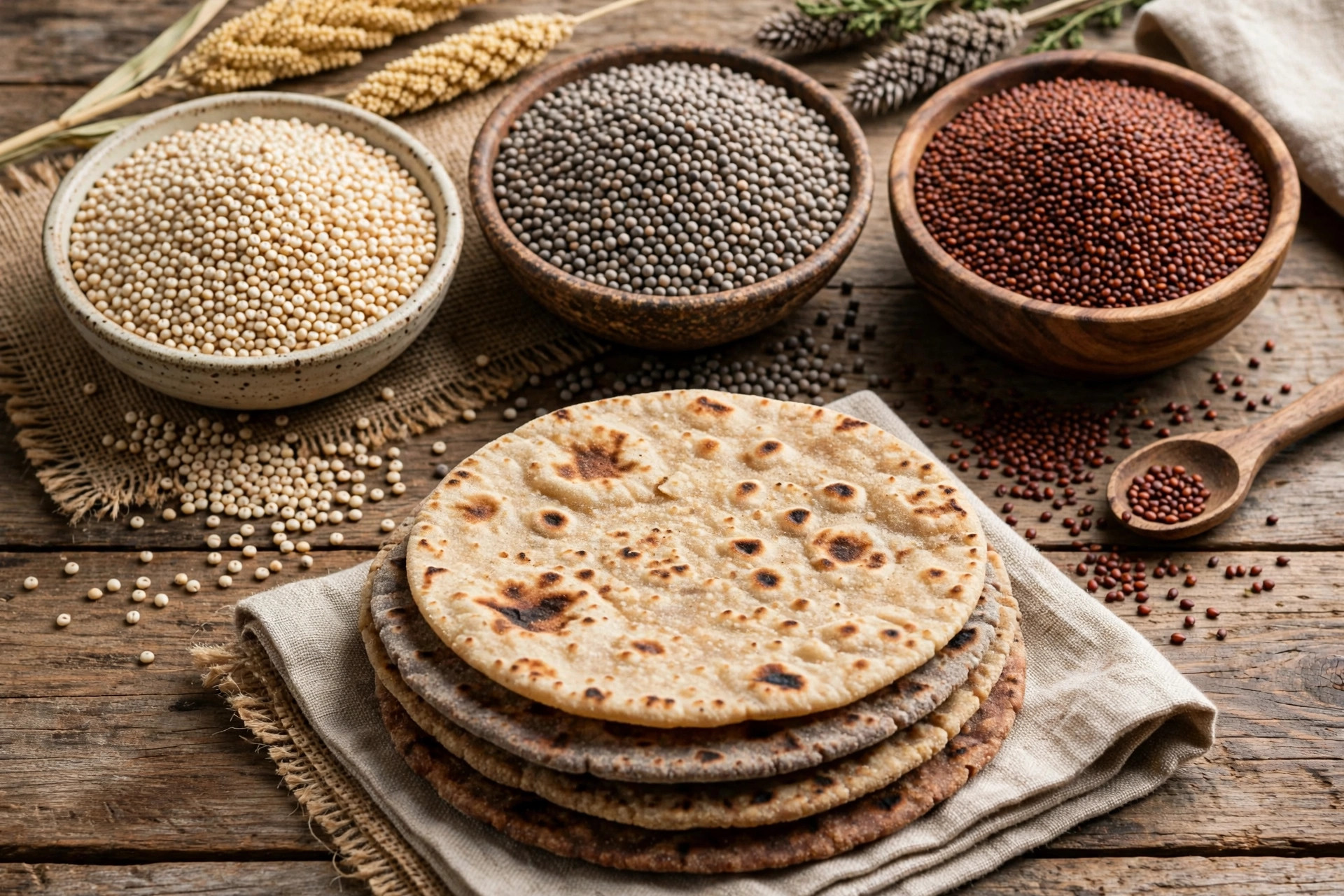
For many Indian families, jowar bhakri, bajra roti and ragi porridge are not discoveries — they are memories. Millets were everyday grains across large parts of India for generations, eaten in the regions where they grew well and suited the local climate. Their recent return to city grocery shelves, restaurant menus and home kitchens is therefore less an invention than a homecoming, and it is worth understanding both halves of that story: why millets stepped back, and why they are stepping forward again.
What counts as a millet
Millets are a group of small-seeded grains, rather than a single crop. In Indian kitchens the best known are jowar (sorghum), bajra (pearl millet) and ragi (finger millet), alongside others such as foxtail, little, kodo and barnyard millets, which have strong regional traditions of their own. They differ in colour, taste and cooking behaviour, but they share a long history of cultivation in India, including in drier regions where they could be grown with less water than rice.
Where millets never really left
The comeback story is mainly an urban one. In many rural and regional food cultures, millets never disappeared: bajra rotis in parts of Rajasthan, Haryana and Gujarat in winter; jowar bhakri in Maharashtra and northern Karnataka; ragi mudde and ragi-based dishes in Karnataka and neighbouring regions. What changed in recent decades was the balance of the wider Indian diet, especially in cities, where rice and wheat became the default grains for most meals and millets were increasingly seen as old-fashioned or coarse.
Several forces pushed that shift. Polished rice and refined wheat flour became widely and cheaply available, they cook quickly and predictably, and they carried an image of modern convenience. Millet flours, by contrast, can be trickier: bhakri and roti doughs made without wheat gluten need practice, some millet flours go rancid faster than refined flour once milled, and a generation of urban cooks simply grew up making fewer of these dishes at home.
Why millets are returning now
A renewed interest in traditional and regional food
Indian home cooking has seen a broad revival of regional recipes, heirloom ingredients and grandparents' dishes, helped by cookbooks, video creators and restaurants celebrating local cuisines. Millets fit naturally into that movement, because for many dishes they are not a substitute ingredient — they are the original one.
Nutrition and variety
Cooks are also looking to widen the range of grains they eat rather than relying on the same one or two every day. Millets are generally whole grains, and each type brings its own character and nutrient profile to the table. The sensible framing is variety: adding jowar, bajra or ragi to a rotation that already includes rice and wheat makes meals more diverse and interesting, without needing to treat any single grain as a miracle food.
Climate and farming conversations
Millets' suitability for drier conditions has made them part of wider discussions about resilient crops and water use in Indian agriculture. That context matters to many buyers and policymakers, and it has supported efforts to bring millets back into mainstream diets.
Official promotion in recent years
In general terms, millets have received notable public promotion in India in recent years, including government campaigns encouraging their production and consumption, and international attention when the United Nations declared 2023 the International Year of Millets, following a proposal led by India. This visibility put millets into school menus, public events, product launches and everyday conversation in a way that reached far beyond their traditional regions.
How people are actually cooking them
The comeback is succeeding where it respects how these grains behave, instead of forcing them into recipes where they do not belong.
- Jowar: Most often rolled into soft bhakris served with vegetables, chutney and butter or oil. Jowar flour is also used for dosa-style pancakes, chillas and in mixed-grain flours.
- Bajra: The classic winter roti, eaten with garlic chutney, white butter, curd or hearty sabzis. Bajra is also cooked as khichdi in some regions, a warming, porridge-like preparation suited to cold weather.
- Ragi: Cooked as mudde (steamed balls eaten with saaru or sambar), stirred into porridge, or made into dosas, idlis, laddoos and malt drinks. Its deep colour and slightly earthy taste make it distinct from the other two.
Alongside these traditional formats, packaged and ready-to-cook millet products — flours, breakfast mixes, noodles, snack mixes and millet-based versions of everyday dishes — have made it easier for first-time buyers to start. Whole millets are also cooked like rice for pulao-style dishes and salads, usually after soaking, which helps them cook evenly.
Practical tips for cooking millets at home
- Buy flour in smaller quantities and store it airtight; millet flours, especially bajra, can turn bitter as their natural oils age.
- Soak whole millets for a few hours before cooking them like rice, for a softer, more even result.
- Use warm water for millet roti dough and knead it well; without gluten, the dough needs moisture and handling to hold together.
- Start with one familiar dish — a bhakri, a ragi dosa or a bajra khichdi — rather than replacing every grain in the kitchen at once.
- Mix grains freely: blending millet flour with wheat flour, or millet grains with rice, is a gentle way to build the habit.
A comeback with staying power?
Trends built only on novelty fade quickly. The millet revival has stronger roots than most: these grains carry genuine regional heritage, they suit Indian growing conditions, and they add real variety in taste and texture to everyday meals. The kitchens most likely to keep cooking them are the ones treating millets as good food first — a hot jowar bhakri with chutney needs no health halo to be worth eating. Seen that way, the comeback is not really about going back. It is about recovering options that the modern Indian kitchen had quietly misplaced.
Frequently Asked Questions
Are millets a new discovery in India?
No. Jowar, bajra, ragi and other millets have been cultivated and eaten in India for a very long time, and they remained everyday foods in many regions even when urban diets shifted towards rice and wheat.
Which are the main millets used in Indian cooking?
Jowar (sorghum), bajra (pearl millet) and ragi (finger millet) are the best known. Others with regional traditions include foxtail, little, kodo and barnyard millets.
Why did millets become less common in cities?
Cheap, convenient rice and refined wheat flour became the urban defaults, while millet dishes required more practice and millet flours keep for a shorter time once milled, so home cooking of millets declined.
What is the easiest millet dish to start with?
A ragi dosa, a jowar bhakri or a simple millet khichdi are good starting points. Soaking whole millets before cooking and using warm water for millet roti dough both make early attempts easier.
Do millet flours need special storage?
Yes. Buy them in smaller quantities and store them airtight in a cool place, because millet flours — bajra in particular — can develop bitterness as they age.