What the phrase actually means
High-protein is a description, not a fixed standard. There is no single agreed cutoff that turns an ordinary breakfast into a high-protein one, which is why the same words can describe a plate with very different amounts of protein. A useful working approach is to look at the total protein in the whole breakfast, not at one ingredient in isolation. For many adults, a breakfast that provides roughly 15 to 25 grams of protein is reasonably described as high in protein compared with a breakfast of toast, jam or a sweetened drink alone. That range is a practical guide, not a prescription. Needs vary with age, body size, activity and overall health, and the rest of the day's food matters just as much as one meal.
Portion size is the part that is most often skipped. Paneer, eggs, dal and curd all contain protein, but a small amount scattered on a plate contributes only a small amount. A spoonful of sprouts on the side is not the same as a full bowl of sprouts, and one cheela is not the same breakfast as two cheelas with a filling. Reading the claim on a packet or menu is a starting point; adding up a realistic portion is what tells you what you are actually eating.
Why people pay attention to protein at breakfast
Protein is one of the nutrients the body uses to build and maintain muscle, skin and other tissues, and it plays a role in many normal body processes. A breakfast with a meaningful amount of protein may be a useful addition to a balanced diet, and many people find a protein-containing breakfast more filling than one made up mostly of sugar and refined flour. That experience varies from person to person. A high-protein breakfast does not guarantee weight loss, does not cure any condition, and does not cancel out the rest of the day's eating. It is simply one practical way to structure a morning meal.
Indian breakfast options, compared fairly
The figures below are approximate values for typical home portions. Actual amounts vary with recipe, portion size, brand and how much water an ingredient has absorbed or lost. Use them to compare options with each other, not as exact measurements.
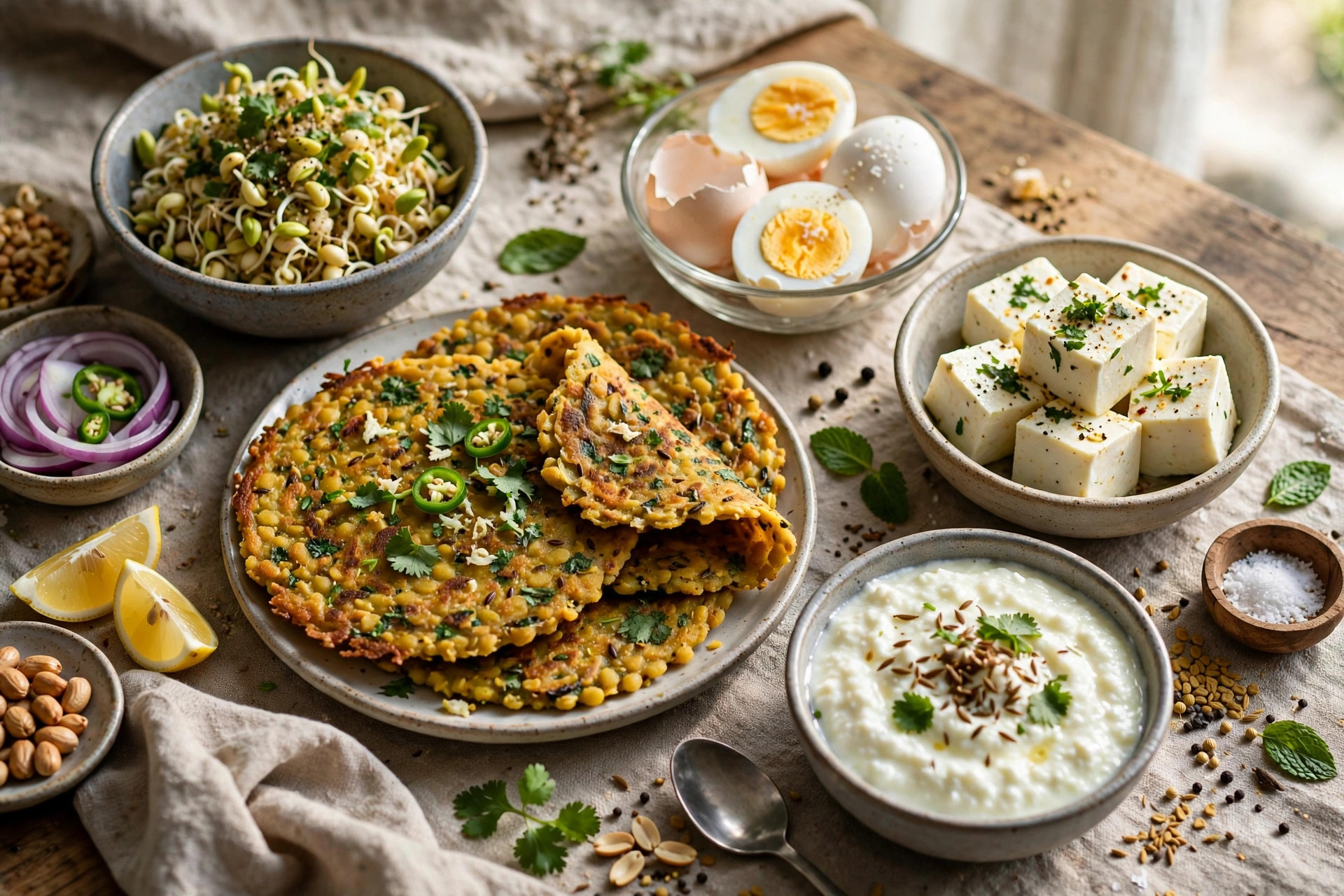
- Moong dal cheela, 2 medium cheelas: approximately 10 to 14 grams of protein, depending on how thick the batter is and whether a paneer or vegetable filling is added. On its own it is a solid base; with a paneer filling or a bowl of curd alongside, the total rises.
- Sprouted moong, 1 cup cooked or steamed sprouts: approximately 7 to 9 grams of protein. Sprouts also bring crunch and fibre to the plate, but a small garnish-sized portion provides far less than a full cup.
- Eggs, 2 large eggs: approximately 12 grams of protein. Eggs are one of the simplest ways to reach a higher total, whether boiled, as an omelette, or with vegetables, provided you eat eggs.
- Paneer, 50 grams: approximately 9 grams of protein. Paneer is concentrated enough that a modest portion contributes a useful amount, which is why it appears in cheela fillings, bhurji and sandwiches.
- Idli-sambar, 3 idlis with a bowl of sambar: approximately 8 to 11 grams of protein in total. The idlis alone are modest in protein; much of the contribution comes from the dal in the sambar, so a generous serving of sambar changes the picture.
- Greek curd or hung curd, 150 grams: approximately 7 to 10 grams of protein, varying widely with how thoroughly the curd has been strained and, for packaged Greek curd, with the brand. Ordinary curd in the same quantity generally provides less.
Read plainly, none of these options is magic and none is useless. Eggs and paneer deliver more protein in a smaller portion. Cheela, sprouts and idli-sambar deliver moderate amounts and often need a partner — curd, paneer, a larger portion, or an extra serving of dal — to reach the 15 to 25 gram working range.
How to build a higher-protein breakfast from these options
Combining two moderate sources is usually easier than forcing one food to do all the work. Practical combinations include:
- Moong dal cheela with a paneer filling, served with a small bowl of hung curd.
- A full bowl of sprouted moong chaat alongside a boiled egg or a glass of milk, if those fit your diet.
- Idli-sambar with an extra serving of sambar, plus curd or an egg on the side.
- A paneer sandwich or paneer bhurji with bread or roti, where the paneer portion is a real portion and not a thin smear.
Three habits help more than any single recipe. First, decide the protein source before deciding the accompaniment, so it does not shrink to a garnish. Second, keep portions honest when you estimate — weigh paneer or measure sprouts a few times if you want a realistic sense of your usual serving. Third, rotate options across the week. Variety makes the routine easier to keep and spreads nutrients across different foods, and a breakfast you enjoy is more likely to be repeated than one eaten only because it scored well on a list.
Common misunderstandings
Adding one high-protein ingredient makes the whole meal high-protein. Not necessarily. A sprinkle of seeds or a single spoonful of sprouts adds very little. The total is what counts.
Only non-vegetarian food counts. Eggs are efficient, but dal, sprouts, paneer and strained curd can be combined to reach a similar total in a fully vegetarian breakfast. It usually takes a slightly larger portion or a combination, not a completely different approach.
More is always better. There is no benefit in treating breakfast as a contest. Once a meal provides a sensible amount of protein alongside vegetables, whole grains or other foods you enjoy, adding more protein on top does not automatically make it a better breakfast.
The bottom line
A high-protein breakfast is best understood as a breakfast with a meaningful total — roughly 15 to 25 grams as a practical guide for many adults — built from realistic portions. Moong dal cheela, sprouts, eggs, paneer, idli-sambar and hung curd can all contribute to that total, especially when two are combined. Figures are approximate, needs are individual, and the meal works as part of a balanced diet over the whole day, not as a promise on its own.
Frequently Asked Questions
How much protein should a high-protein breakfast have?
There is no single official cutoff. As a practical guide, roughly 15 to 25 grams for the whole breakfast is a reasonable working range for many adults, but individual needs vary and personal medical advice should come from a qualified professional.
Can a vegetarian Indian breakfast be high in protein?
Yes. Combining foods such as moong dal cheela, sprouts, paneer and hung curd can reach a similar total to an egg-based breakfast. It usually relies on combinations and honest portions rather than one ingredient alone.
Are the protein figures for these foods exact?
No. All figures in this article are approximate and labelled as such. Recipe, portion size, brand and preparation change the actual amount, so use the figures for comparison rather than as precise values.
Does a high-protein breakfast guarantee weight loss?
No. No breakfast can guarantee weight loss or cure a health condition. A protein-containing breakfast may be a useful addition to a balanced diet, and overall eating, activity and health over time are what matter.